Information Technology – Master Degree, Postgraduate Diploma or Certificate

To see the most relevant information, please let us know if you are an international student.

Are you an International Student?

To see the most relevant information, please let us know if you are an international student.

Advance your knowledge in the IT field

These qualifications are designed to further prepare and enhance your employment opportunities in the IT sector where there are recognised skills shortages in New Zealand and internationally.

The Information Technology qualification combines a masters, postgraduate diploma and a postgraduate certificate into a flexible, multi-layered programme designed to extend, deepen and consolidate your future at the forefront of information technology.

The programme will further develop your ability to think critically while gaining specialised knowledge and a number of high-level skills in the IT field that can be applied in a wide range of IT situations.
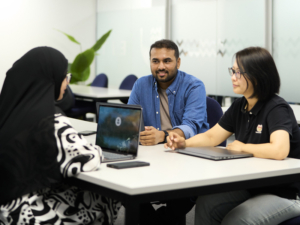
Advance your knowledge in the IT field

These qualifications are designed to further prepare and enhance your employment opportunities in the IT sector where there are recognised skills shortages in New Zealand and internationally.

The Information Technology qualification combines a masters, postgraduate diploma and a postgraduate certificate into a flexible, multi-layered programme designed to extend, deepen and consolidate your future at the forefront of information technology.

The programme will further develop your ability to think critically while gaining specialised knowledge and a number of high-level skills in the IT field that can be applied in a wide range of IT situations.

Programme Outline

Master of Information Technology (MIT)

The MIT is a Level 9 programme with a minimum of 180 or 240 credits. It enables those who have completed a Bachelors’ degree in Information Technology/Computing to achieve a postgraduate level qualification in Information Technology.

The programme can be completed in 24 months (240 credits) or 18 months (180 credits) full-time or up to eight years part-time, depending on your previous study and experience and specific course preferences.

It is designed to extend and deepen your knowledge and skills by building on attainment gained from undergraduate study in the computing field and to extend current information technology professionals in their career progression.

The programme builds on your existing information technology knowledge and skills through courses that research and apply that knowledge and those skills in an environment that combines project work, case studies, real-life simulations, and practical work experience.

It encourages flexibility, acknowledging the diversity of the IT environment and the diversity in student interest and needs.

You will be provided with courses where you can research and apply information technology knowledge and skills to a workplace encouraging you to apply research skills to identify solutions to information technology problems or issues.

Three pathways are offered:

  1. Course work
    A broad range of courses are offered from which students can select courses to further develop their professional knowledge and skills.
  2. Industry integrated (Professional Practice)
    This programme is tailored to meet both students’ and their organisation’s development requirements.
  3. Research
    This programme allows students to undertake a significant applied research project to further develop research skills and applied knowledge.

The three pathways emphasise the application of knowledge to provide you with the opportunity to apply knowledge in the workplace and to focus on an aspect of information technology through completion of a range of research projects.

Postgraduate Diploma in Information Technology (PGDipIT)

The PGDipIT is a one year Level 8 full-time programme with a minimum of 120 credits. It enables those who have completed a computing degree to achieve a postgraduate level qualification in information technology.

Those who wish to progress from the PGDipIT to the MIT will need to complete eight courses (120 credits) at Level 8.

The programme can be completed in 12 months full-time or up to four years part-time, depending on your previous study and experience and specific course preferences. It can act as an entry point into the masters degree if you do not initially meet the entry requirement and need to demonstrate your ability to study at a postgraduate level. Alternatively, if you initially enrolled in the masters degree and are not in a position to complete it, you can transfer any applicable courses to the postgraduate diploma for the purposes of qualification completion.

Postgraduate Certificate in Information Technology (PGCertIT)

The PGCertIT is a Level 8, 60 credit programme which enables those who have completed a computing bachelor degree, or similar, to achieve a postgraduate level qualification in the information technology area.

The programme can be completed in six months full-time or up to two years part-time, depending on your previous study and experience and specific course preferences. It can act as an entry point into the masters degree if you do not initially meet the entry requirement and need to demonstrate your ability to study at postgraduate level. It also provides an exit qualification if you have enrolled in the masters degree and, for some reason, are unable to complete the degree.

If you have any questions please feel free to contact us.

Career and Study Opportunities

The MIT, PGDipIT and PGCertIT qualifications enable you to pursue domestic and/or international professional careers within different types of industries and agencies. These can include the following areas:

  • Systems analyst
  • IT consultant
  • Business analyst
  • IT infrastructure support analyst
  • E-commerce advisor
  • Project manager
  • Security analyst
  • IT manager

Further your study pathway with a doctoral level qualification.



Entry Requirements

A personal interview may be part of the application process.

MIT (240)

The academic entry requirement for the MIT (240) is one of the following:

  • A NZQF-listed undergraduate degree (or equivalent) including courses that develop an understanding of Information Technology; or
  • At the discretion of EIT, where an applicant’s situation is compelling but not covered by the requirements listed above.

MIT (180)

The academic entry requirement for the MIT (180) is one of the following:

  • A NZQF-listed undergraduate degree (or equivalent) in the Information Technology field with a minimum of the equivalent to a B average as per the EIT-specified 11-point achievement-based grading system; or
  • A graduate diploma (or equivalent) in the Information Technology field with a minimum of the equivalent to a B average as per the EIT-specified 11-point achievement-based grading system degree; or
  • An equivalent professional qualification in a different field if the applicant can supply evidence of work experience at degree level or above within the Information Technology field, subject to an interview and/or the submission of a portfolio of evidence to establish the status and relevance of the applicant’s prior learning and experience; or
  • Completion of the Postgraduate Diploma in Information Technology with a minimum B average; or
  • At the discretion of EIT, where an applicant’s situation is compelling but not covered by the requirements listed above.

PGDipIT (120 credits)

The academic entry requirement for the PGDipIT is one of the following:

  • An undergraduate degree in computing at a recognised educational institute; or
  • An undergraduate degree in a related area (e.g. business, visual arts, and science) and appropriate IT work experience in a junior/middle management position.
  • Tertiary graduates who have appropriate work experience in a middle/senior management position and wish to improve their skills and gain a higher level qualification may also apply.
  • At the discretion of EIT, where an applicant’s situation is compelling but not covered by the requirements listed above.

PGCertIT (60 credits)

The academic entry requirement for the PGCertIT is one of the following:

  • A NZQF-listed undergraduate degree (or equivalent) in Information Technology, Computing or similar; or
  • An undergraduate degree in a related field with a minimum of the equivalent to a B average (as per the EIT-specified 11-point achievement-based grading system), subject to assessment by the Programme Coordinator; or
  • At the discretion of EIT, where an applicant’s situation is compelling but not covered by the requirements listed above.

Provisional Entry

  • Applicants who do not meet the criteria above, but present evidence of ability to succeed (e.g. maturity, life experience, work experience, other study); or
  • Entry to subsequent study is conditional on success at the entry level.

English Language Entry Requirements

All applicants must demonstrate an acceptable level of English language fluency prior to acceptance in their programme. For international students, ways in which English language fluency may be demonstrated include the following:

  • Successful study of a programme in which English was the language of instruction (conditions apply).
  • Completion of a New Zealand Certificate in English Language (Level 5 with any endorsement).
  • IELTS Academic score of 6.5, with no band score lower than 6, achieved in a single test within the two years preceding enrolment.
  • Completion of accepted international English language proficiency tests (refer to NZQA English language entry requirements for international students) with scores equivalent to the IELTS scores above.

Entry with Credit

You may already have knowledge or skills that can be recognised as part of your intended study. This may take a number of different forms including study at a private training establishment, workplace training, other tertiary study, or life experiences. If you think you may qualify, you may want to apply for Cross Credit (CC) or Recognition of Prior Learning (RPL).

  • CC is based on the equivalency of courses or qualifications. You would apply for CC if you have passed a very similar course at the same level.
  • RPL is based on the assessment of your current knowledge and skills. You would apply for RPL if you had gained the relevant knowledge and skills through life experiences and informal learning situations.
  • CC and RPL can only be awarded for Level 8 study, not Level 9.

You will be asked to provide details of anything that you would like considered as credit toward your intended programme of study, as part of your application.

You must apply prior to enrolment in the course. CC and RPL cannot be awarded for a course if you are enrolled in that course.

CC may be granted from other degree programmes, providing they are not part of the entry qualification.

For further information and enquiries about CC and RPL please contact the Postgraduate Programmes Administrator in your region.

Auckland – email adminak@eit.ac.nz
Hawke’s Bay – Lavinia Wyatt on 06 830 1279 or email lwyatt@eit.ac.nz

How to Enrol

Step 1 – Check entry requirements

Make sure you have read and understood the entry requirements for your situation and background.

Entry requirements can be different for domestic and international students.

Step 2 – Confirm campus and check key dates

The next intake date(s) for your chosen course and campus are listed in the Course Details panel on this page.

Dates can vary between campuses, so make sure you have selected the campus you wish to study at.

Step 3 – Confirm fees and costs

Visit https://www.eit.ac.nz/fees/ to see the fees for this programme.

Step 4 – Complete any supporting forms

If your course requires any supporting forms, they will be listed below under ‘Supporting Documentation’

Step 5 – Submit your application

You’ll need an up-to-date email address to start your online application.

You’ll also need to know what you want to study – your degree or programme and majors and/or minors, and the courses you plan to take.

You may be asked to submit supporting documentation with your application.

Programme Outline

Master of Information Technology (MIT)

The MIT is a Level 9 programme with a minimum of 180 or 240 credits.

It is designed to extend and deepen your knowledge and skills by building on attainment gained from undergraduate study in the computing field and to extend current information technology professionals in their career progression.

The programme builds on your existing information technology knowledge and skills through courses that research and apply that knowledge and those skills in an environment that combines project work, case studies, real-life simulations, and practical work experience.

It encourages flexibility, acknowledging the diversity of the IT environment and the diversity in student interest and needs.

You will be provided with courses where you can research and apply information technology knowledge and skills to a workplace encouraging you to apply research skills to identify solutions to information technology problems or issues.

Three pathways are offered:

  1. Course work
    A broad range of courses are offered from which students can select courses to further develop their professional knowledge and skills.
  2. Industry integrated (Professional Practice)
    This programme is tailored to meet both students’ and their organisation’s development requirements.
  3. Research
    This programme allows students to undertake a significant applied research project to further develop research skills and applied knowledge.

The three pathways emphasise the application of knowledge to provide you with the opportunity to apply knowledge in the workplace and to focus on an aspect of information technology through completion of a range of research projects.

Postgraduate Diploma in Information Technology (PGDipIT)

The PGDipIT is a one year Level 8 full-time programme with a minimum of 120 credits.

Those who wish to progress from the PGDipIT to the MIT will need to complete eight courses (120 credits) at Level 8.

It can act as an entry point into the masters degree if you do not initially meet the entry requirement and need to demonstrate your ability to study at a postgraduate level.

Postgraduate Certificate in Information Technology (PGCertIT)

The PGCertIT is a Level 8, 60 credit programme.

The programme can be completed in six months full-time or up to two years part-time, depending on your previous study and experience and specific course preferences. It can act as an entry point into the masters degree if you do not initially meet the entry requirement and need to demonstrate your ability to study at postgraduate level.

If you have any questions please feel free to contact us.

Career and Study Opportunities

The MIT, PGDipIT and PGCertIT qualifications enable you to pursue domestic and/or international professional careers within different types of industries and agencies. These can include the following areas:

  • Systems analyst
  • IT consultant
  • Business analyst
  • IT infrastructure support analyst
  • E-commerce advisor
  • Project manager
  • Security analyst
  • IT manager

Further your study pathway with a doctoral level qualification.

Entry Requirements

Academic Entry Requirements

Master of Information Technology (180 Credits)

  • An undergraduate degree in a STEM (Science, Technology, Engineering, Maths) field with a minimum of a B- average in the final year of study.
  • Alternatively, candidates can apply for the two year Masters (240 credit) if they meet the entry criteria for this programme.

Master of Information Technology (240 Credits)

  • An undergraduate degree or graduate diploma including courses that develop an understanding of Information Technology.
  • Other graduate qualifications and industry experience may be considered. Please contact the International Centre for further information: international@eit.ac.nz

Postgraduate Diploma in Information Technology

  • An undergraduate degree in the field of Information Technology.

Postgraduate Certificate in Information Technology

  • An undergraduate degree in the field of Information Technology.

English Language Entry Requirements

All applicants must demonstrate an acceptable level of English language fluency prior to acceptance in the programme. For international students, ways in which English language fluency may be demonstrated include the following:

  • PTE (Academic) score of 58 with no band score lower than 50
  • IELTS (Academic) score of 6.5 with no band score lower than 6.0 (or equivalent) achieved within the last two years.
  • International equivalents to IELTS accepted by NZQA or successful study of a programme in which English was the language of instruction (conditions apply).

Further information about NZQA English language entry requirements for international students can be found at www2.nzqa.govt.nz/tertiary/english-language-entry-requirements-for-international-students/

How to Apply

Ready to apply? It’s easy!

Complete and sign our international student application form at eit.ac.nz/apply-online-international/

  • Indicate which programme you intend to study.
  • Attach a verified copy of your birth certificate or passport to use as identification.
  • Remember to include all other supporting documents.
  • We will assess your application and let you know the outcome as soon as possible, usually within three to five working days.

On-campus study in New Zealand

Step 1 – Pay your fees

  • After submitting your application, you will receive an Offer of Place letter by email with details of your tuition and other fees payable.
    Please note: If you have applied using the services of an agent, a copy of this information will also be sent to your agent.
  • Pay your fees and apply for your student visa.
  • We will send you a receipt, which you will need when you apply for your student visa.

We recommend you apply at least 12 weeks before your intended start date. You can apply online at www.immigration.govt.nz
If you have any questions about the process, contact your agent or email visas@eit.ac.nz

Step 2 – Prepare to come to New Zealand

Book your flights

When your student visa is approved, book your flights and ensure you meet all government-mandated entry requirements to come to New Zealand. Check the Immigration New Zealand website for the most up-to-date information.

Organise your accommodation

If you haven’t already organised your accommodation, you should now decide which of the accommodation options is most suitable for you. You can find our more about our EIT accommodation options here.

Step 3 – Connect with us

  • Be sure to complete and submit the arrival form sent to you by the International Student Support Officer.
  • Your International Student Support Officer will contact you prior to the start of your programme to let you know what you need to do and keep you up to date on what to expect when you arrive.

Online study

Step 1 – Enrol

  • After submitting your application, you will receive your acceptance into the programme by email alongside instructions on how to enrol.
  • Complete and sign the enrolment form provided to you by our Admissions Team and send it back to internationalapplications@eit.ac.nz
    Please note: If you have applied using the services of an agent, a copy of this information will also be sent to your agent.

Step 2 – Choose your courses and pay your Fees

  • Your course selection form will be sent to you by our team.
  • After completing your course selection form, you will be sent an invoice. You can then pay your fees by bank transfer to EIT’s account. Full account details and payment information will be provided on your invoice.

Step 3 – Connect with us

Your International Student Support Officer will contact you after you enrol to keep you up-to-date with anything you need to know, including details about your Orientation, where you will meet your classmates and all about studying at EIT.

Whether you join us on-campus or online, we welcome you to the EIT student community!

If you need any help you can contact our friendly staff at international@eit.ac.nz

“I chose to study at EIT because it offers a welcoming and diverse learning environment, and I really value the way Māori culture is integrated into education here.”

Jing Su

“I chose to study at EIT because it offers a welcoming and diverse learning environment, and I really value the way Māori culture is integrated into education here.”

Jing Su

Study at EIT

Disability Support

Support is available for students with physical, sensory, intellectual, and learning disabilities (including dyslexia, dyspraxia and other neurodiversity) and mental health conditions. Support is designed to provide equitable opportunities and is available to all students with permanent or temporary disabilities or health conditions, including when recovering from injury or surgery. Services are available depending upon your needs and range from information and advice to technology solutions and alternative arrangements for test and exams. Our disability peer support group Te Rōpu Āwhina meets regularly on the Hawke’s Bay Campus to share kai, connection and wellbeing.

For more help please email Desley Aranui daranui@eit.ac.nz

Wellbeing Support

Wellbeing support is available to all students. We can help you to identify your goals, support your needs, and connect you with appropriate support on and off campus. We use Te Whare Tapa Whā as our guiding model for holistic support and connectedness.

We have a Rainbow Diversity peer support group Te Roopu Āniwaniwa on the Hawke’s Bay Campus, as well as wellbeing
drop ins and workshops to support you to maintain and improve your wellbeing.

For more information contact Barbara West bwest@eit.ac.nz

Māori and Pasifika Support

You can get advice, mentoring and support for cultural needs and values, te reo Māori, waiata and tikanga, scholarships, iwi and hapū registrations and grants.

Our Pasifika student support team aims to create a trusting and culturally inviting space for students to feel supported and thrive in their education journey. Our team is passionate and dedicated to removing barriers to learning by working with students and their aiga and staff in ensuring diversity and equity is met. We support students with studylink, tutor support, wraparound support and mentoring, cultural competency and much more.

For more information contact:

Pasifika
Valencia Taurima Heperi 
VTaurimaHeperi@eit.ac.nz

Māori pastoral care
Kaihoe Apiata
KApiata@eit.ac.nz

Māori Academic
Opal Horsefield Te Aho
OHorsefieldTeAho@eit.ac.nz


Academic Learning Services

Academic Learning Services is here to assist you on your journey towards the successful completion of your studies at EIT. Our aim is for you to become confident, competent and independent learners.

We have dedicated advisors who can assist with your learning.

Find out more email Heather Pilbeam hpilbeam@eit.ac.nz

Scholarships

EIT offers a variety of scholarships across various subjects and programme levels.  Some scholarships are based on your age, some are specific to the subject you want to study.  Not all scholarships are based on your academic ability and anyone wanting to study should investigate what scholarships are available to them.  

You can find a list of EIT scholarships here however there are many more scholarships offered nationally.  Information about these is on an database called “givME”. givME is accessible here, at EIT or at some public libraries. If you would like to come to EIT to look through the giveME database don’t hesitate to contact scholarships@eit.ac.nz or call in for a chat.

Enrol Now

Enrol now for 2026 – programmes filling fast!

Study at EIT

International Student Support

Our International Student Support Officers are here to support you every step of the way. Providing you with the one-to-one help, advice, information and guidance you need to succeed. 

Find out more about our International Student Support Services below:

Auckland Campus
Hawke’s Bay Campus

Academic Services

Academic Learning Services is here to assist you on your journey towards the successful completion of your studies at EIT. Our aim is for you to become confident, competent and independent learners.

We have dedicated advisors who can assist with your learning.

Find out more:

Learning Support Services

Apply Now